
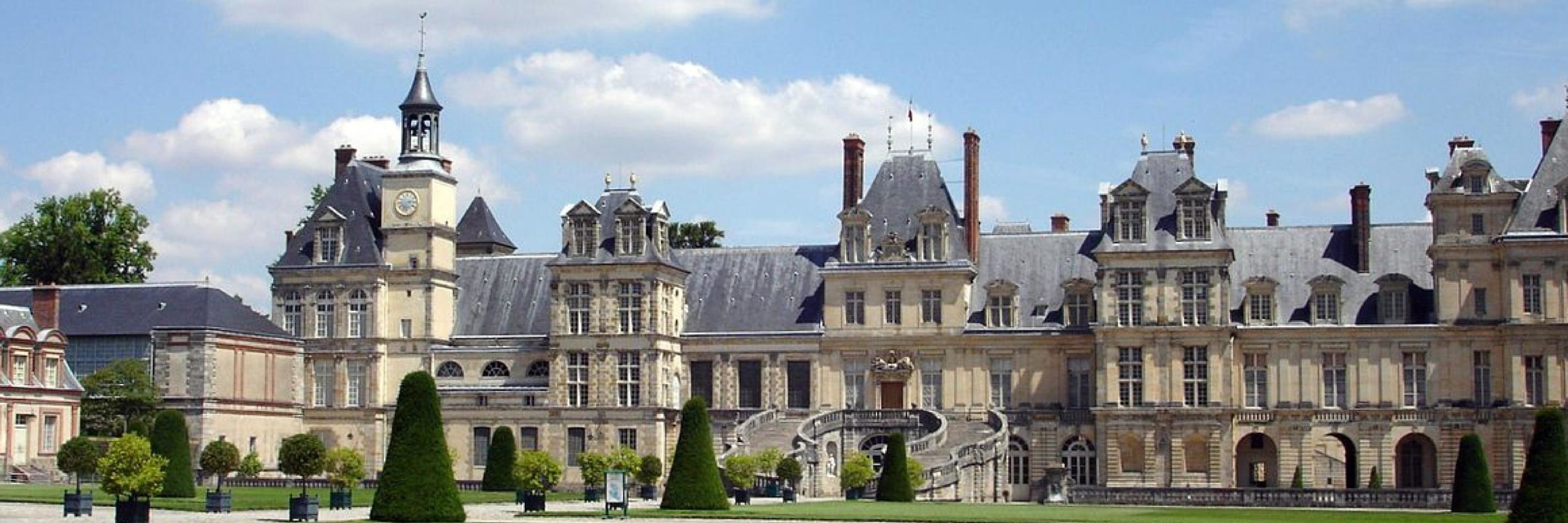


On this guided tour of the Château de Fontainebleau, discover a major landmark in French history. Indeed, the Château de Fontainebleau is the only royal and imperial château to have been continuously inhabited for eight centuries.
Nearly 900 years of history!
The first traces of the castle date back to 1137 A fortified castle is mentioned on this site by Louis VII the Younger, in a charter from the King of the Franks.
Continuously inhabited for 8 centuries, Fontainebleau has undergone many transformations. The beauty of this historic site will captivate you. The grandiose Renaissance-style Château de Fontainebleau is a jewel of French heritage.
With more than 1,500 pieces set in 130 hectares of parks and gardens, The Château de Fontainebleau offers a synthesis of French architecture from the 12th to the 19th century.
This guided tour takes visitors on a journey to the heart of French history, to discover “the true home of kings, the house of centuries”, as Napoleon called it.
Capetians, Valois, then Bourbons, Bonaparte and finally Orléans, all the members of the reigning dynasties have succeeded one another within the walls of this château on the outskirts of Paris. Kings and queens, then emperors and empresses, embellished the Château de Fontainebleau, built around the original keep. As a result, the ensemble quickly became a vast palace in which a number of key historical events took place.
To visit the Château de Fontainebleau is to benefit from an exceptional presentation of French history, art and architecture.
A witness to French history
During your guided tour of the Château de Fontainebleau, discover the intense passages of our country's history witnessed here.
Your guide will tell you, for example, about the scene in the «Courtyard of Farewell», where Napoleon 1er delivered his famous speech to his care after his abdication.
Agreements, alliances and treaties were signed here. Like the one between Austria and the Netherlands following the Marmite War. What a curious anecdote! Ask your tour guide to explain it to you.
Treasures to discover
Château de Fontainebleau is a royal castle located in Fontainebleau, about 60 km southeast of Paris. It is considered one of the world's largest and most France's most beautiful castles.
Château de Fontainebleau was originally built as a hunting residence for the kings of France in the 12th century. It has been enlarged and renovated over the centuries by the various monarchs who have resided there, such as Francis I, Henri II, Louis XIII and Napoleon Bonaparte. Most of the renovation work was carried out in the 16th century, during the reign of François I, who added many Italian Renaissance elements to the château's architecture.
The Château de Fontainebleau is an outstanding example of a French Renaissance château, with a combination of Gothic, Renaissance and Classical architectural styles. It includes remarkable buildings and gardens such as the Galerie François I, the Chapelle de la Trinité, the Salle du Conseil, the Salle des colonnes, the Jardin Anglais and the Jardin à la Française.
It is also associated with many important historical figures such as Diane de Poitiers, Catherine de Médicis, Marie-Antoinette, and even the famous Russian writer Leo Tolstoy, who lived there for a time.
Today, the Château de Fontainebleau is a popular tourist attraction, attracting thousands of visitors every year. It has been listed as a UNESCO World Heritage Site in 1981.
Must-sees at Château de Fontainebleau
There are countless details to remember from your guided tour of this place. Art and history buffs could spend a lifetime here.
Here are a few Fontainebleau highlights.
The Empress's bedroom This is the room where all the sovereigns have lived. This room was used by Empress Josephine (the furniture on display is that which she knew) and is adorned with paintings and sculptures. It is considered one of the most sumptuous rooms in the château.
The horseshoe-shaped staircase.
The throne room Formerly a bedroom, this richly decorated room was used for royal and imperial ceremonies, including coronations and royal weddings.
It was transformed by Napoleon 1er to become a Throne Room in 1808. It is the only surviving Napoleonic throne room.
When to visit the château?
It can be visited all year round, except on Tuesdays and on the 1st of July.er January 1er May and December 25.
Opening times are slightly longer between April and September.
We recommend that you book in advance your guided tour, to ensure that your tour guide will be available and that there are still places available (in the case of a group visit).
Visit the courtyards and gardens
Unlike the château, the courtyards and gardens are free and open every day.
Opening times vary according to the season, and both the Jardin de Diane and the Jardin Anglais close earlier.
Visit the park
The castle park is open 24 hours a day, every day.
Who can visit the Château de Fontainebleau?
You can discover the wonders of Fontainebleau as a couple, with friends or as a family.
Even with children, your guide will know how to adapt and pass on information that will arouse the curiosity of young and old alike.
It's also an interesting cultural outing for groups of colleagues.
The château is also open to visitors with disabilities, with special arrangements to facilitate their access and enjoyment.
Near Paris
Situated just 60 kilometers from the capital, Fontainebleau is an ideal part of a wider tour of the Ile-de-France region and its other monuments.
Looking for a Paris tourist guide to discover historic sites and experience unusual tours? During a vacation or for the duration of a visit weekend around Paris, you can also include a guided tour of the Château de Versailles, 1 hour's drive from the Château de Fontainebleau.