
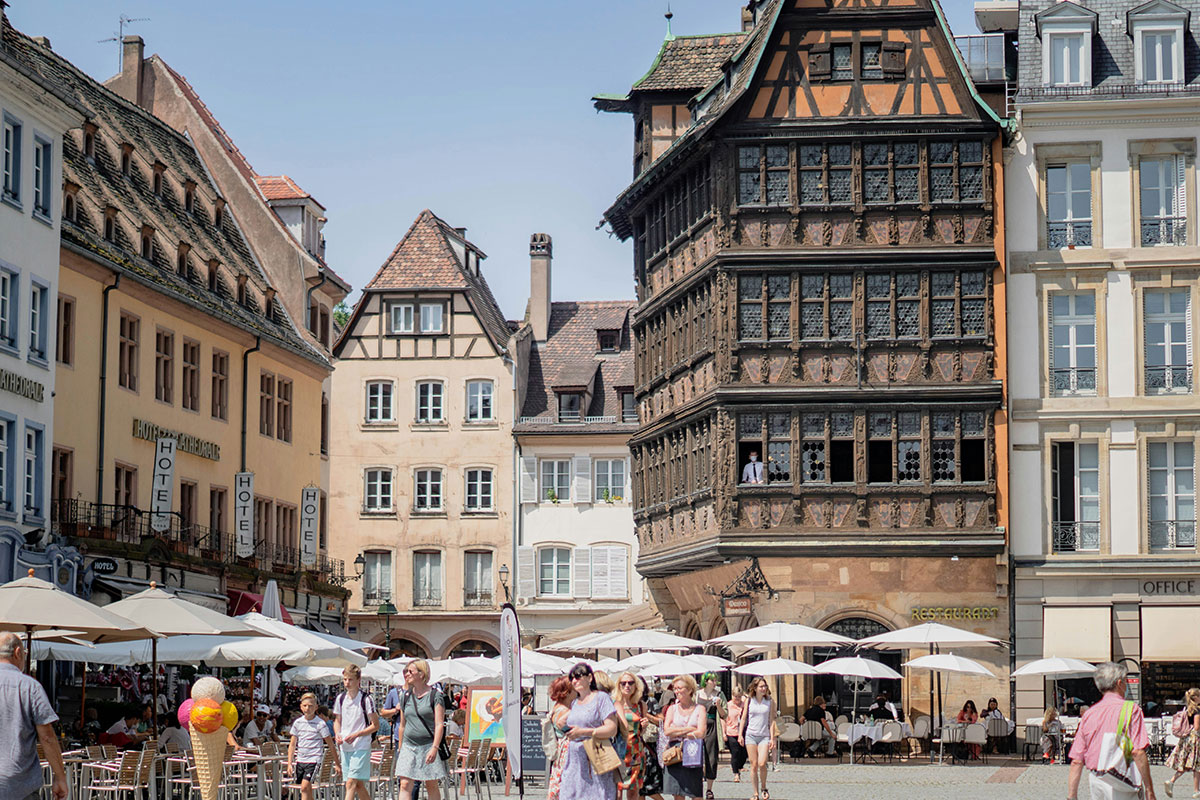
Visiting Strasbourg in autumn allows you to experience the city at a different pace: colorful foliage, walks along the Ill River, heritage, and gourmet breaks go well with the season. Strasbourg also makes an excellent starting point for visiting Alsace in autumn, amidst vineyards, wine-producing villages, and the Vosges forests.
Why is autumn so well-suited for a visit to Strasbourg?
In Strasbourg, autumn begins to change the landscapes from the very first weeks of the season. The trees that line the quays and certain large squares gradually transition from green to yellow, and then to orange tones. The light fades earlier and gives the sandstone facades, with timber-framed houses and to the canals a different atmosphere from that of the long summer days.
The season is especially well suited for walking. In September and for a good part of October, you can still spend several hours exploring the historic districts, parks, or the banks of the Ill. With the return of cooler days, Strasbourg remains easy to visit by alternating between the outdoors and indoor heritage sites.
This is also what makes an autumn stay quite flexible: a morning in Petite France, a museum during a shower, and then a late-afternoon stroll if the skies clear up.
Where to walk to enjoy the autumn colors in Strasbourg?
You can observe the changing seasons without leaving the center. The quays, canals, and wooded areas create several pleasant routes around the Grande Île.
A good option is to start from the historic center, head down to Petite France, reach the Covered Bridges, and then continue the walk along the Ill River. You go from a very urban setting to quieter areas without needing to plan a real hike.
La Petite France, between half-timbered houses and reflections on the canals
La Petite France is part of must-see neighborhoods of Strasbourg, to be visited in any season.
Autumn suits him particularly well. The trees add touches of yellow and russet between the facades, while the lower light accentuates the reflections on the water. Go through Benjamin-Zix Square, walk along the canals, and then continue towards the Covered Bridges.
The Vauban Dam is also worth a visit. Its terrace offers a unobstructed view of the towers of the Covered Bridges, the roofs of Petite France and the cathedral in the background. The area remains compact, making it easy to include in a day of sightseeing without rushing from one site to another.
The banks of the Ill to follow Strasbourg along the water
The Ill provides a very simple guiding thread to explore Strasbourg on foot. Its banks skirt part of the historic center and allow for a regular change of scenery, between ancient heritage, vegetation, and more residential neighborhoods.
You can walk for an hour or extend the walk depending on the weather. There is no need to plan a closed route: leave the quays to visit a monument, have a coffee, or head to a square, then return to the water a few streets further on.
After a rainy day, certain areas can be damp. A pair of sneakers or shoes suitable for walking will be more practical than city shoes, especially if you plan to go from cobblestones to quays and green spaces.
The Grande Île: Strasbourg's historical heritage on foot
Surrounded by the Ill, the Grande Île is the historical center of Strasbourg. It is listed as a UNESCO World Heritage Site and concentrates a large part of the monuments associated with the city: visit the Strasbourg Cathedral, the Kammerzell House, the historical squares and Petite France.
Everything is easily done on foot. From Cathedral Square, it takes just a few minutes to reach the shopping streets, the quays, or the oldest parts of town.
However, take the time to look up. Strasbourg does not tell the story of a single era: timber-framed houses stand alongside religious buildings, private mansions, and structures built during different periods of its history.
Have you got a bit more time? Head over to the Neustadt. This district, developed mainly during the German period after 1871, features wide avenues and monumental architecture that contrasts sharply with the narrow streets of the Grande Île.
The ensemble formed by the Grande Île and the Neustadt is now a World Heritage site.
Cathedral, museums and heritage: what to visit when the weather turns bad?
A rainy day does not ruin the schedule. The Cathédrale Notre-Dame naturally stands out as a must-see visit, with its Gothic architecture, stained glass windows, and astronomical clock.
Right next door, the Musée de l'Œuvre Notre-Dame extends the exploration of Strasbourg's medieval and Renaissance heritage. Its collections maintain a direct link with the artistic history of the city and that of the cathedral.
The Rohan Palace also deserves several hours of shelter. It notably houses the Archaeological Museum, the Museum of Decorative Arts, and the Museum of Fine Arts. Just check the opening hours and days before your visit, as they may vary.
The advantage of Strasbourg is precisely this proximity to numerous places to visit. It is a big city with a small-town feel where people love to stroll and wander.
A shower is coming? You go into a museum. The sky clears up an hour later, and just like that, you are back on the quays or the streets of the Grande Île without wasting half a day on travel.
Parks and gardens: where to watch Strasbourg change colors?
For a truly plant-based break, the Orangerie Park remains a safe bet. Its paths, trees, and bodies of water provide a pleasant setting for a more leisurely stroll, away from the busiest streets of the center.
At the end of summer or the beginning of autumn, you could to see the storks fly away for their migration.
Visit Pourtalès Park offer a different atmosphere, further away from the historic district. It is well suited for an autumn walk as soon as the foliage starts to change.
Closer to the Grande Île, look towards Place de la République. The ginkgos take on a very distinct golden hue there in the autumn. The walk easily fits into a discovery of the Neustadt.
Staying in Strasbourg for only a short time? Choose a park based on the rest of your itinerary rather than making extra detours. An hour at the Orangerie or around Place de la République is already enough for a change of scenery.
A guided tour of Strasbourg, but without the summer crowds
After the heavy crowds of the summer, autumn can offer more comfortable conditions for discovering certain districts of Strasbourg, before the resurgence of activity associated with the Christmas period.
A guided tour of Strasbourg This is where the importance of connecting these sites becomes clear. Why did Petite France develop around water-related trades? Where does the contrast between the Grande Île and the Neustadt come from? How did the French and German periods shape the city’s architecture?
A tour guide places the streets and monuments within this broader history. Rather than accumulating dates, the tour helps to understand the successive transformations of Strasbourg and the uses of the buildings encountered.
Guides Tourisme Services work with professional tour guides and organize tours in many languages.
Visiting Alsace in the Fall: How Far Should You Go From Strasbourg?
Strasbourg works very well as a starting point for visiting Alsace in autumn, because the The TGV station has excellent service, and Entzheim Airport is nearby and accessible by TER. All that's left is to choose how far you want to go.
For a short trip, set aside a full day for Strasbourg. If you have an extra day, a trip to the Alsatian vineyards is almost a must. The Vosges require a little more time, especially if you’re planning an outing to enjoy nature or listen to the deer rut.
The Alsatian vineyards: between the grape harvest, wine-growing villages, and fall colors
September and October are a very unusual period in the vineyards. The dates of the grape harvest vary depending on the year, the region, and the grape variety, but winemaking activity remains very visible.
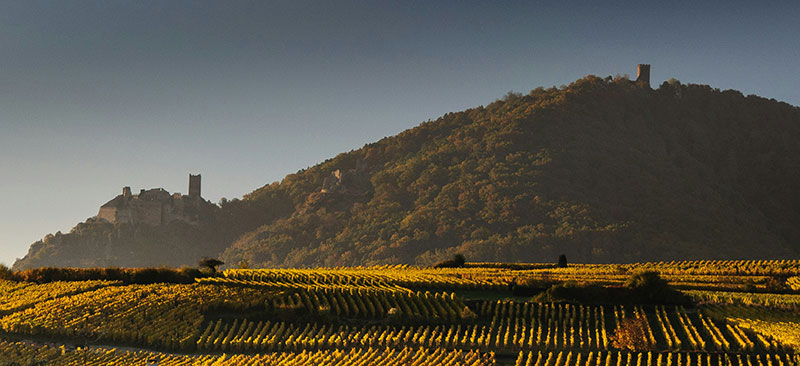
As the season progresses, the hillsides change color. The rows of vines take on shades of yellow and orange, giving the landscape a very different look from what it has in the height of summer.
You can combine a stroll through the vineyards with a visit to a village or a winery. A wine tasting rounds out the outing: it gives you a better understanding of the winemakers’ work and the connection between the wines and their environment.
Alsace's Vineyards and Wine Route in the Fall
The Forests and the Vosges During the Deer Rutting Season
The beginning of fall also marks the deer rut season. In forested areas, the calls of the males can be heard mainly at dusk and during the night.
Some guided outings are organized in the Vosges, particularly in forested areas well-suited for wildlife observation.
While the sound of a stag’s bellow is incredible to hear, don’t forget that a stag is a wild, large, and powerful animal. Keep your distance, remain quiet, and follow local guidelines to minimize disturbance to the animals during this sensitive time.
The Wine Route Takes on a New Look in the Fall
The Alsace Wine Route It stretches from Marlenheim to Thann for more than 170 kilometers, at the foot of the eastern slope of the Vosges. The route passes through numerous villages and wine-growing regions, with several trails dedicated to exploring the vineyards.
If you’re starting from Strasbourg, don’t make the mistake of trying to cover the entire route in a single day. Instead, choose a manageable stretch, a few nearby villages, and perhaps a winery to visit. You’ll spend less time in the car and more time enjoying the scenery.
In the fall, the rows of vines stand out particularly well against the hillsides. The changing colors accentuate the landscape, while the villages retain their half-timbered houses and winemaking heritage.
The view of the Alsatian vineyards at sunset, with These vibrant landscapes are just… magnificent!
The new wine, called Neier Siasser in Alsace, is also a seasonal tradition for some producers. For tastings, plan your transportation before you go: a designated driver, an organized tour, or another suitable option.
Gourmet Delights in Strasbourg as the Days Grow Cooler
Fall quickly makes you want to extend a walk with a meal in a warm place. The winstubs is a good entry point to Alsatian cuisine, with an atmosphere often more traditional than that of a general restaurant.
Sauerkraut naturally makes a comeback as temperatures drop. Hot chestnuts, chestnut desserts, and new wine may also make an appearance as the season progresses.
Be sure to set aside some time for a meal, though, and enjoy the Alsatian experience to the fullest.
September, October, or November: When is the best time to visit Strasbourg to enjoy the fall?
September is still close to the end of summer. The days are still long enough for walking, the vineyards are bustling with activity, and the conditions are ideal for a trip that combines Strasbourg and the Wine Route.
October is more in line with the typical image of Alsace in the fall. The foliage becomes more vibrant in the vineyards, parks, and forests. It’s also an interesting time for certain outings related to the rutting season, depending on natural conditions and the local calendar.
November brings a change of pace. The days grow shorter and the weather becomes more unpredictable. Museums, the cathedral, heritage tours, and fine dining then take center stage. Strasbourg also begins to gear up for the run-up to the Christmas festivities.
For long walks and vineyard tours, September and October remain the easiest months to plan. November is better suited for a city break focused on cultural heritage, fine dining, and indoor attractions.
How to organize a trip between Strasbourg, the wine route, and Alsatian nature?
Start by booking a real day in Strasbourg. Begin with the Grande Île, choose a guided tour of Petite France, then the quays and a few monuments are more than enough to fill the itinerary. And the best way to avoid running around everywhere is to take advantage of a guided tour of Strasbourg with a professional guide.
With a second day, you can add the Neustadt, a museum, or a guided tour without turning your stay into a race against the clock.
An extra day easily opens the door to the vineyards. Choose a section of the Wine Route, group together nearby stops, and perhaps plan a winery visit.
For the Vosges and the red deer rut, it is better to book a dedicated time slot, often at the end of the day. This outing does not fit well with an already busy urban schedule and requires more flexibility.
Also leave some leeway for the weather: walks along the quays, park, or vineyards in good weather; cathedral and museums during rainy spells. You will then be able to enjoy Strasbourg and Alsace in autumn without spending your stay watching the sky.