
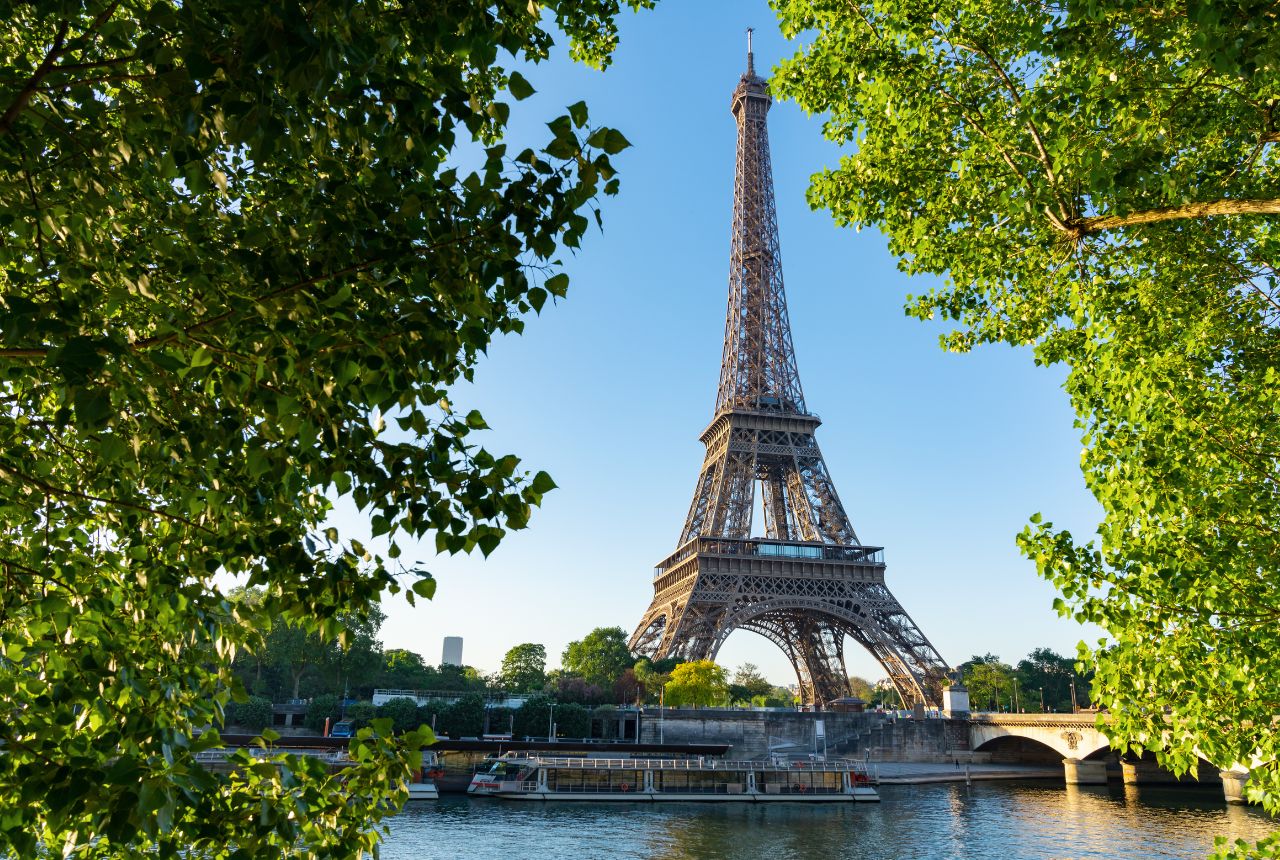
Must-see tours in Paris combine grand monuments, major museums, and more intimate spots. From the Eiffel Tower to the Palais Garnier, and from Notre-Dame to the Louvre, Montmartre, or the covered passages, each stop reveals a different facet of the capital. Here are the 10 visits not to be missed to discover Paris without overlooking the essentials.
The Eiffel Tower, iron grand dame
The Eiffel Tower seems familiar even before you arrive in Paris. It's everywhere: on posters, travel photos, souvenirs, movies, and shop windows around the Champ de Mars.
And so grand and majestic: 300m high, 330m with the antennas.
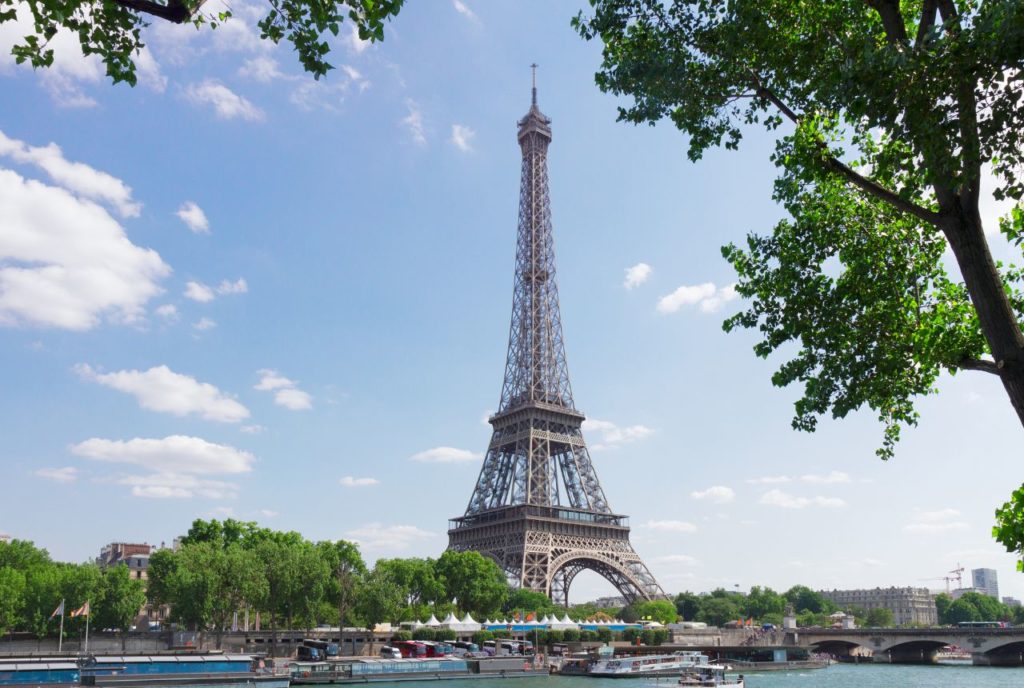
Yet, when you stand at its feet, the effect remains intact. The structure appears both massive and light, almost transparent depending on the angle. Beams intersect, elevators rise within the structure, visitors gaze upwards.
It's easy to understand why this monument, built for the 1889 Universal Exhibition, eventually became one of the capital's most iconic landmarks.
Visit Tour Eiffel visit with a guide changes a lot depending on the time chosen. In the morning, the approach is calmer, with clear light on the Champ-de-Mars gardens. At the end of the day, the connection to the city becomes more spectacular: the avenues light up, the Seine is tinted, the grand monuments gradually stand out.
Walk up to the second floor It offers a different perspective on the tower. No longer are we simply looking at Paris from a balcony; we're truly traversing the architecture. Each level brings us closer to Gustave Eiffel's vision: a technical construction, designed to withstand the wind, but which has become a sensitive, almost emotional emblem.
The summit, at 276m, attracts many, naturally. The view is broad, impressive, sometimes a little dizzying. But the second floor is often enough to offer the best reading of Paris. The monuments remain identifiable, the neighborhoods are still distinct, and the distances seem less abstract.
It is also a place where the support of Paris tourist guide makes a difference. Not for reciting dates, but for placing the Eiffel Tower in the Paris of universal expositions, artistic controversies, and the industrial boom.
Because in the end, what do we really see if we limit ourselves to taking the same photo as everyone else?
Notre Dame Cathedral of Paris
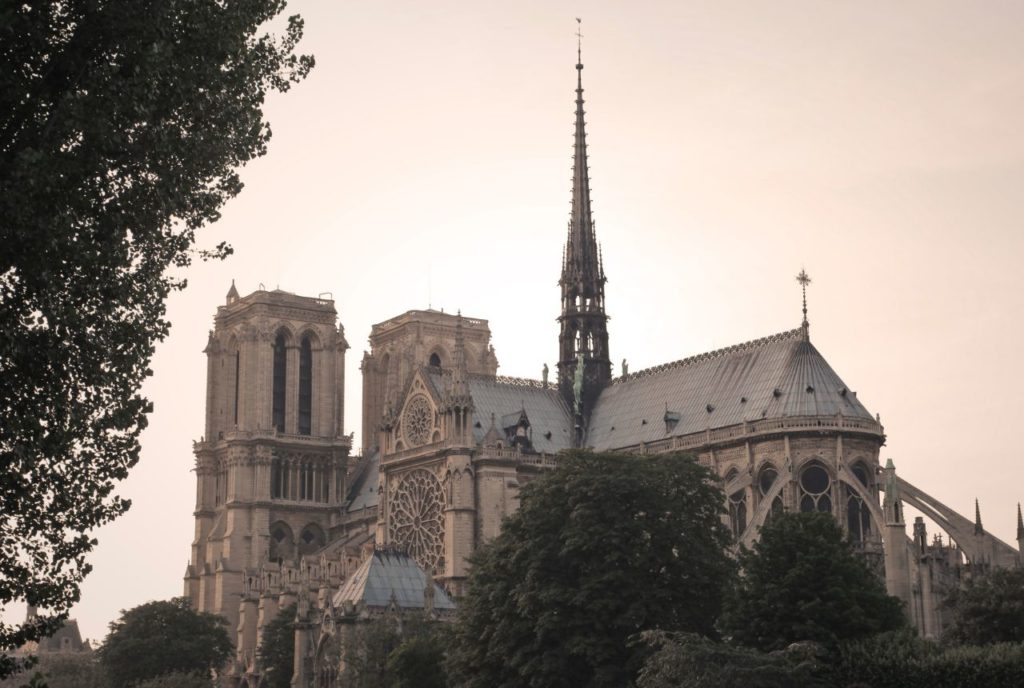
Notre Dame holds a special place in the Parisian imagination. Since its reopening Following the restoration work carried out in the wake of the 2019 fire, the cathedral reopened to the public on December 8, 2024, and can now be visited with renewed interest.
The emotion comes first from the interior volume. The nave, the vaults, the light, the cleaned stones, the stained glass windows: everything seems more legible, without the place losing its solemnity.
A medieval structure can be found, as well as the result of contemporary work carried out by artisans, architects, restorers, and journeymen.
You can enter for one guided tour of Notre Dame As a simple visitor, believer, history buff, or heritage enthusiast. Everyone finds their own level of understanding.
The western facade remains one of the great stone books of Paris. The portals, the gallery of kings, the towers, the restored or preserved sculptures tell a Religious Middle Ages, urban and political. On the sides, the flying buttresses give the structure an almost organic shape. From the apse, the cathedral appears more complex, and also more fragile.
The forecourt is worth lingering on. It opens onto the Île de la Cité, ancient heart of Paris, where several centuries of religious, judicial, and royal power are concentrated. Within a few minutes' walk, you can reach the Sainte-Chapelle, the Conciergerie, the Seine riverbanks, the flower market. This proximity gives the visit a real coherence.
Notre Dame is not visited like an isolated monument: it interacts with the city around it.
For groups, the challenge is often finding the right balance between recent emotion and long history. Experienced Paris guide, as those mobilized by Guides Tourisme Services in its heritage tours, can help maintain this accuracy: explaining without overwhelming, contextualizing without chilling the place.
The Louvre Museum
The Louvre can be intimidating: it's the largest museum in the world! And the most visited: 9 million people in 2025.
But it is also an old palace, a labyrinth of galleries, staircases, courtyards, and rooms where one can quickly lose energy.
The worst way to visit the Louvre is undoubtedly to try to see everything. No one really sees it all in a day; it's impossible. Even regular visitors choose a theme, a period, or a department. It is this selection that makes the visit enjoyable.
The Mona Lisa attracts crowds, of course. The Venus de Milo, the Winged Victory of Samothrace, The Wedding at Cana, and The Raft of the Medusa are also among the most sought-after stops. They deserve their reputation, even if their success can sometimes create a strange distance from the work. One looks as much at the visitors as at the painting.
The Louvre becomes more exciting when you accept to slow down.
An Oriental antiquities room, a French sculpture gallery, the apartments of Napoleon III, or a collection of art objects can leave a more lasting impression than a hurried glance at ten masterpieces. The museum tells the story of how civilizations have depicted gods, kings, bodies, battles, interiors, and myths.
Ieoh Ming Pei's long-debated pyramid is now part of the experience. It organizes the entrance, creates a strong break with the classical facades, and reminds us that the Louvre is not frozen in its past. This tension between ancient palace and modern museum gives the place much of its strength.
For a first visit, a two-to-three-hour tour is often enough. Beyond that, attention wanes. You can focus on Ancient Egypt, the Italian Renaissance, large-format French works, or royal collections. A guided tour then offers real comfort: less hesitation in the rooms, less wasted walking, and more meaning in the choice of artworks.
The Louvre doesn't have to be exhausting. It primarily asks that you give up the idea of seeing everything.
The Orsay Museum
The Musée d'Orsay offers a very different experience from the Louvre. You enter an old train station, and you feel it immediately. The great nave, the clock, the glass roof, and the open volumes give the place a sense of space that few Parisian museums possess.
The building is as important as the collections.
Orsay primarily covers the period from the mid-19th century to the early 20th century. It was a dense time: the transformation of Paris, the rise of leisure, the birth of artistic modernity, new relationships with the body, the landscape, and the city. Painters no longer looked at the world in the same way. Subjects shifted towards train stations, cafés, theaters, gardens, studios, and everyday scenes.
Impressionists naturally attract many visitors. Monet, Renoir, Degas, Pissarro, Sisley: their works have become almost familiar images. But Orsay is not limited to this often very crowded room. Courbet, Manet, Van Gogh, Cézanne, Gauguin, Rodin, or Camille Claudel allow for the exploration of more complex breaks.
You can feel Paris changing its skin.
A short visit can focus on the masterpieces, including a stop by the grand clock and the Impressionist galleries. A more in-depth visit is best enhanced by exploring the sculpture, decorative arts, and works related to architecture. That’s where the museum takes an unexpected turn.
Orsay particularly appeals to visitors who enjoy exploring periods of transition. From academic art to the avant-garde, from history painting to street scenes, from official salons to a more free-spirited perspective, the museum offers a glimpse into a century of rapid change.
On Thursdays during the late-night openings, the atmosphere can be more pleasant. Less noise, different lighting, a more intimate feeling in certain rooms. It's not guaranteed, but it's often worth it.
The Arc de Triomphe
The Arc de Triomphe can be seen from afar, but you have to get closer to grasp its power. In the center of Place Charles-de-Gaulle, it dominates an immense roundabout from which twelve avenues radiate.
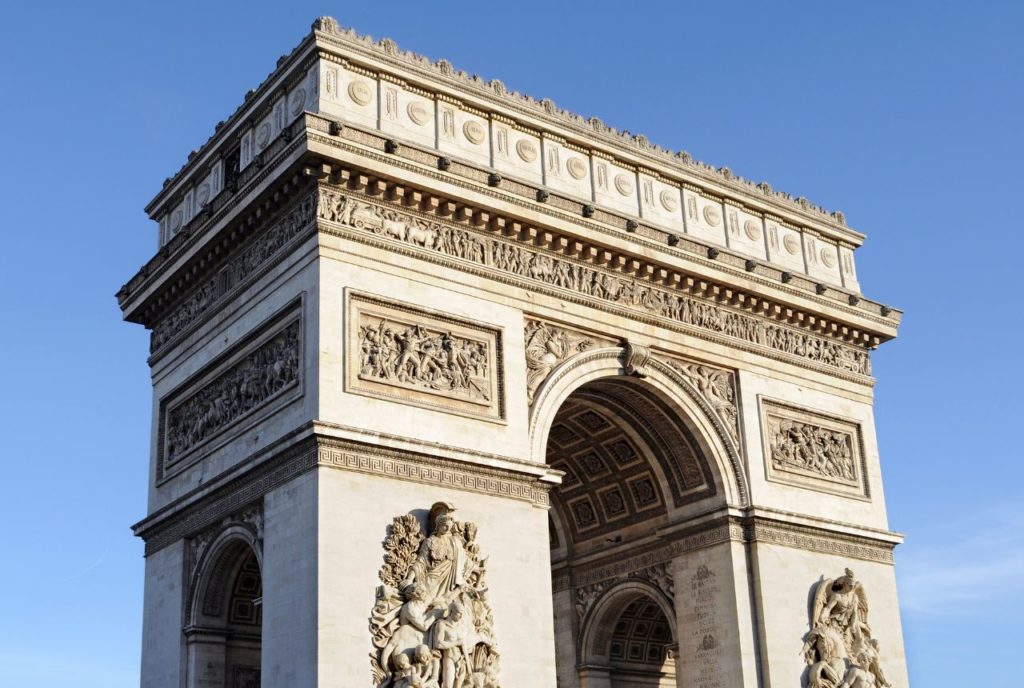
Arrival via the underground passage There is something special about it. You leave the hustle and bustle of traffic behind, then emerge at the foot of the monument, facing the sculpted reliefs, the engraved names, and the Tomb of the Unknown Soldier. The site is a tourist attraction, but it remains deeply solemn.
The flame of remembrance gives the monument a dimension that the terrace alone does not suffice to comprehend.
The Arc is not just a viewpoint on Paris: it carries a military and national memory, with all that can be solemn about it, sometimes even delicate to comment on in front of foreign audiences.
Inside, the permanent exhibition helps put the monument into context. Napoleon I commissioned the monument after Austerlitz, but the history of the Arc extends far beyond the Empire. It gradually became an official venue for parades, commemorations, and gatherings.
The climb requires effort. The steps are numerous, the staircase turns, and breaks are welcome.
From up here, Paris unfolds with rare clarity. The Champs-Élysées slopes down toward the Place de la Concorde. The view stretches all the way to the Louvre. On the other side, the axis leads to La Défense. The Eiffel Tower, Sacré-Cœur, and the grand boulevards are easily spotted. It is one of the best places to understand the city as a network of lines, axes, and successive powers.
A Guided tour of the Arc de Triomphe In the evening, it often gives the place more intensity. The avenues shine, headlights draw circles, the city appears almost staged.
The hill of Montmartre
Montmartre is one of the most charming neighborhoods in Paris when you venture down its side streets. There you’ll find stairways, low-rise houses, small squares, vineyards, modest facades, and traces of old workshops. The neighborhood retains something of an old village, even though this image has been largely cultivated and sometimes staged.
The Sacré-Cœur overlooks the whole area.. Its white silhouette catches the eye from many vantage points in Paris. At its base, the view of the capital is expansive, though often crowded. Just a few streets away, the atmosphere is already different.
Rue Lepic, Place Émile-Goudeau, the Moulin de la Galette, the Lapin Agile, Dalida’s house, and Rue de l’Abreuvoir make up a more nuanced itinerary. We move from the artistic Montmartre to the working-class Montmartre, from cabarets to studios, from dance halls to memories of the Paris Commune.
The neighborhood doesn't handle hurried visits well. You have to accept the climbs, the detours, the little stops to fully enjoy the experience, the artistic side of the place.
A Guided tour of Montmartre hill It especially helps to sort between real history and folklore. Montmartre loves embellished stories. Some are charming, others end up masking the richness of the place. The guide's role then is to maintain the neighborhood's character without turning every wall into a postcard backdrop.
Morning often remains the best time. The streets breathe more. The cobblestones, gardens, and vistas gain presence.
Covered walkways
The covered passageways offer a different way to explore Paris. Less spectacular, more understated, and more «secret» as well. You leave the wide boulevards behind and step into glass-enclosed galleries where the city’s noise fades into the background.
They focus mainly on the Right Bank, around the Grands Boulevards, the Palais-Royal, and the Bourse district. Galerie Vivienne, Passage des Panoramas, Passage Jouffroy, Passage Verdeau, Passage du Grand-Cerf: the names come up often, but each has its own unique atmosphere.
Their appeal lies in the mix. Architecture, commerce, strolling, literature, fine dining, vintage shops, bookstores, restaurants, staircases, painted signs. Nothing is particularly grand, yet taken together, they paint a vivid picture of 19th-century Paris.
These passages emerged alongside a new way of exploring the city. Here, you walk sheltered beneath a glass roof, past shop windows. Strolling becomes an activity in itself. Shopping matters, but simply looking around matters almost as much.
The Galerie Vivienne charms visitors with its mosaics and elegance. The Passage des Panoramas has a livelier, more commercial feel, with its restaurants and tightly packed storefronts. The Passage Jouffroy, near the Musée Grévin, retains the charm of a historic promenade. The quieter Passage Verdeau is often a favorite among lovers of books, prints, and collectibles.
On a rainy day, the Guided tour of Paris's covered arcades makes sense. But they shouldn't be saved just for bad weather. The covered passages offer a glimpse into an inner Paris, one that's less obvious than the riverbanks or grand monuments.
They can be linked to the Palais-Royal, the theater boulevards, the Opéra Garnier. The route then becomes very coherent, almost effortless, with a succession of close but very different places.
The Conciergerie
The Conciergerie is located in the heart of the Île de la Cité, very close to Sainte-Chapelle. Many visitors pass by without realizing what the building contains. Its austere appearance is not designed to immediately charm.
Inside, the place takes on another dimension.
The Salle des Gens d'armes is impressive with its Gothic proportions. Columns, vaults, low light: you can sense the former medieval palace, when the Capetian kings administered power from this part of Paris. Before being associated with the revolutionary prison, the Conciergerie was a space for the court, service, and government.
The French Revolution profoundly marked the memory of the place. Marie Antoinette was held there before her execution, which attracts a large portion of visitors. But the Conciergerie is not limited to this figure. It allows us to explore revolutionary justice, detention conditions, the speed of trials, and political violence.
This is a monument that calls for a sober commentary.
The tour works well with Notre-Dame and Sainte-Chapelle, as everything is within a very tight perimeter. In half a day, we can read several facets of the Île de la Cité: faith, royal power, justice, administration, national memory.
The digital mediation device helps to reconstruct certain lost or transformed spaces. It does not replace observation of the building, but it provides useful points of reference, especially for visitors who have difficulty visualizing medieval volumes that have since been partially modified.
The Conciergerie rarely leaves people indifferent. It doesn't aim for flashiness. Instead, it imposes a form of gravity, in successive layers.
Père Lachaise Cemetery
Père Lachaise is nothing like a simple collection of famous tombs. It is an immense urban landscape, with its hills, its avenues, its crossroads, its funeral chapels, its trees, and its silences.
People often come here to find a name: Édith Piaf, Jim Morrison, Oscar Wilde, Chopin, Colette, Molière, Balzac, Proust. Very quickly, the place goes beyond this logic of seeking out famous graves. Some anonymous burials attract as much attention as the most visited tombs. A sculpture, a rusty gate, a faded inscription, a cracked chapel can tell a lot.
The cemetery is vast and hilly. An impromptu visit can become tiring, especially if you want to see everything on foot without a plan. Entering from the top, on the Gambetta side, often allows for a gradual descent towards the more famous sections. It's more comfortable, and the route seems less disjointed.
Père Lachaise speaks of memory, but also of society. One can see the evolution of funerary tastes, social hierarchies, political affiliations, and collective tributes there. Certain monuments recall painful episodes in French and European history. The Wall of the Federals, linked to the Paris Commune, gives the site a strong political significance.
The right tone must be maintained. The location remains an active cemetery, not a set.
A guided tour of Père Lachaise can avoid two pitfalls: running from one celebrity to another, or getting lost without understanding. The right rhythm, rather, is to alternate well-known figures, less expected stories, and an observation of the funerary landscape. One then leaves with a rather rare sensation in Paris: that of having traversed a living place of memory, not a closed museum.
The Palais Garnier
Visit Palais Garnier It announces its color right from the facade. Sculptures, columns, gilding, domes, allegorical groups: the building fully embraces its love of decoration. You are in Paris during the Second Empire, an era of urban staging, grand public works, society evenings, and social spectacle.
Inside, the effect is even stronger.
The grand staircase forms the heart of the visit. One ascends slowly, almost involuntarily, because the space imposes a form of ceremony. The marbles, the railings, the paintings, the openings to the side galleries give the impression that the public itself becomes part of the show. Even before entering the hall, the opera has begun.
The Grand Foyer operates on a different, more worldly, almost palatial level. It evokes state rooms, intermission conversations, and elegant promenades. Everything is designed to be seen. This isn't merely a building dedicated to music and dance; it's a place where Parisian society also came to be seen.
The performance hall is not always accessible, as the Palais Garnier remains an active theater. Rehearsals, set-ups, performances, or technical constraints may alter the tour route. This is part of the nature of the venue. You are not visiting a fixed set, but a still-used building.
The ceiling painted by Marc Chagall, when visible, creates an unexpected dialogue with Charles Garnier's architecture. Some visitors love this contrast, while others find it confusing. This tension makes the place more vibrant.
The Palais Garnier is very well visited with the covered passages or the nearby department stores. The entire neighborhood tells the story of 19th-century Paris: consumption, entertainment, architecture, transportation, and leisure. A guided tour helps connect these elements without turning the stroll into a lecture.
You often leave with an impression of abundance. Not necessarily light, but memorable. The Palais Garnier doesn't aim for discretion, and that's precisely what makes it so Parisian.
What tours should you book in advance in Paris?
The Eiffel Tower, the Louvre, the Musée d’Orsay, the Conciergerie, and the Palais Garnier are best booked in advance. The most popular time slots sell out quickly, especially during school holidays, weekends, and periods of high tourist traffic.
How many days does it take to visit the must-sees in Paris?
Three days are enough to see the main sights without rushing too much. For a more comfortable pace, five days are preferable. You can then alternate between museums, monuments, walking through neighborhoods, and more relaxed visits like the covered passages or Père Lachaise cemetery.
What is the best tour to do for a first time in Paris?
The Eiffel Tower remains the most obvious choice for a first visit. It provides an immediate landmark for the city. For a more complete discovery, you can pair it with Notre-Dame, the Louvre, and Montmartre, which showcase very different faces of Paris.
Can you visit Paris with a licensed tour guide?
Yes, and it's often more comfortable for understanding places without wasting time. A guided tour guide helps connect monuments, neighborhoods, and artworks to their historical context. This is particularly useful at the Louvre, Notre-Dame, Montmartre, or Père Lachaise.