
Paris can also be explored off the beaten path: beneath the streets, in an unknown cemetery, in front of a contemporary courthouse, or in the footsteps of a seamstress who became a legend. For an unusual tour of Paris, these seven ideas offer concrete experiences that are easy to organize and varied enough to surprise even regulars.
Guided tour of the Paris metro
We take the Paris metro without thinking too much about it.
Yet, one only needs to look up, at the entrances, the tiles, the corridors, and the station names to understand that it tells part of the story of Paris.
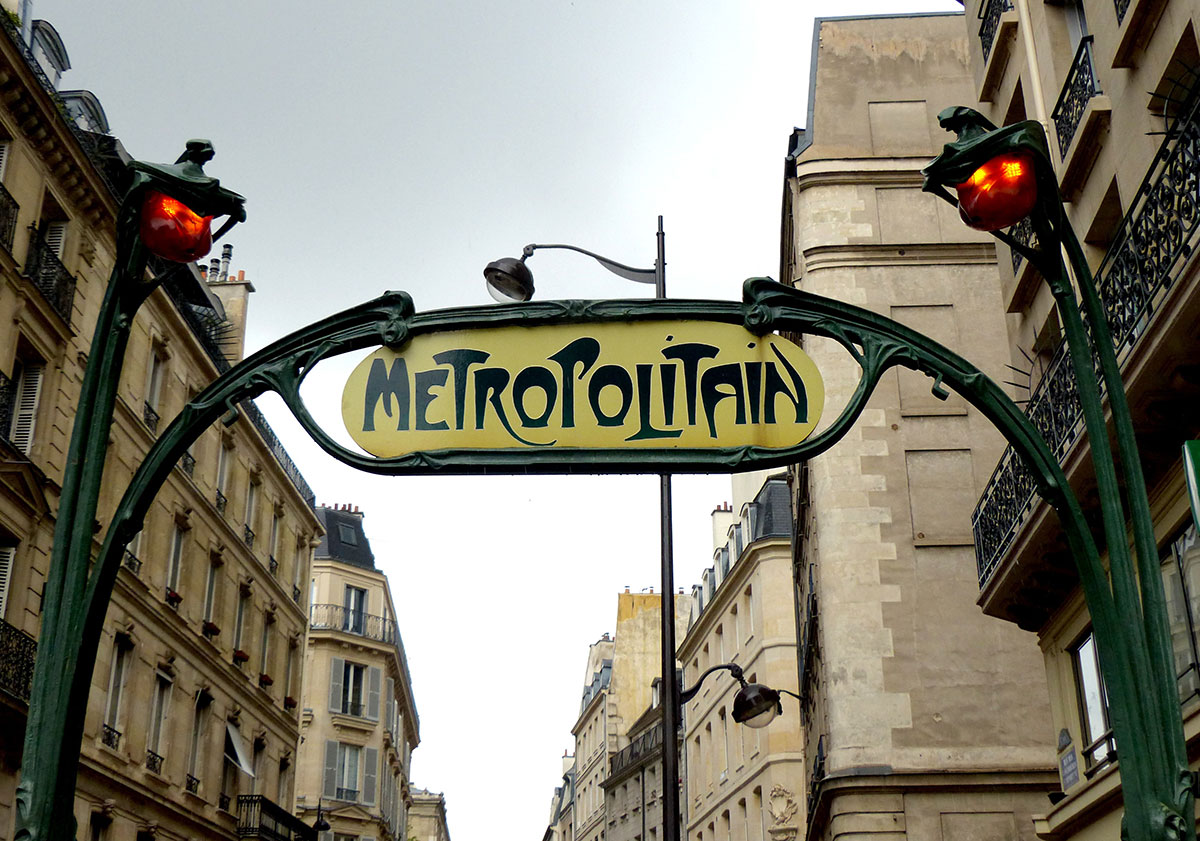
A Guided tour of the Paris Metro gives relief to this network open to the public in 1900. Of course, there's no question of going to work; you're not following a simple route between two stations: you're observing the Guimard entrances, the Decoration choices, correspondences, the stations transformed over time and sometimes even some ghost stations visible from the train cars.
For an unusual first visit to Paris, it's an excellent choice: the place is known to everyone, but rarely looked at with attention.
Why choose this unusual tour?
This output is suitable for both the casual visitor and the Parisians who are used to the metro. It is spoken there architecture, engineering, of urban circulation, but without useless technical courses.
The tour guide puts what you see on site into context: why some stations are curved, why the corridors seem endless in some places, how the first lines accompanied the extension of the capital.
During peak hours, the experience quickly becomes tiring. To enjoy the journey, opt for a late morning or early afternoon slot, with comfortable shoes because you'll be doing a lot of walking: you'll walk, go up and down stairs, and sometimes change lines.
What can be observed during the route
According to the itinerary, the visit can focus on line 1, linked to the beginnings of the network, or on line 4, known for its passage under the Seine and the Île de la Cité. Other routes favor station decorations, previous access or large matching nodes.
The subway remains a active public space. The noise, the crowds, and the security measures are all part of the experience. That's also what makes it a very Parisian experience: you discover heritage without leaving the city's daily flow.
The Asnières-sur-Seine Animal Cemetery
In Asnières-sur-Seine, just on the outskirts of Paris, Pet Sematary offers a surprising, calm, and often touching tour. Many still call it The Dog Cemetery, but the site also welcomes cats, birds, rabbits, turtles, and other pets.
Created at the end of the 19th century, the site shows how much the relationship with animals has evolved within families. The tombs, plaques, and inscriptions tell us a lot: affection, grief, the place an animal held in a home. Some burials are very simple, others resemble small funerary monuments. One can be surprised by the emotion this visit evokes.
A visit between heritage and emotion
This cemetery should be visited with restraint. This is not a light curiosity or a strange setting to photograph quickly. It is a true place of memory.
With a guided tour, the walk takes on a broader dimension. You place the site within the history of Asnières-sur-Seine, within funeral practices, and within the evolution of the status of the pet. The visit is about heritage as much as it is about daily life., which makes it accessible to a varied audience.
It can suit adults, families with teenagers, or visitors looking for unusual outings away from the hustle and bustle of central Paris. The pace is slow, the paths are tree-lined, and the atmosphere encourages observation rather than rushing from one point of interest to another.
The essential points
The entrance building sets the tone upon arrival. The pathways then allow for the discovery of very different tombs, with inscriptions that are sometimes sober, sometimes very personal.
Some known animal graves naturally attract attention, but the anonymous tombs are often the most telling.
A well-crafted visit can cover:
- The history of the site and its creation ;
- The place of pets in society ;
- the forms of tribute inscribed on the tombs ;
- the most remarkable monuments; ;
- The link between the cemetery, Asnières-sur-Seine, and the banks of the Seine.
The new Paris Court
The new Paris Court It's visible from afar, Porte de Clichy. With its vertical silhouette and glass facades, the building designed by Renzo Piano contrasts with the more solemn image of the Palais de Justice on the Île de la Cité.
This Unusual Paris visit This appeals to those who love to understand how a city changes. Here, you step away from old facades, private mansions, and medieval streets.
How is the public welcomed in a modern court? How is circulation organized? How does a judicial building fit into a neighborhood undergoing transformation?
Understand the architecture of the place
The building impressed first by its height. Then the details take over: the superimposed volumes, the accesses, the spaces open to the public, the relationship with the Batignolles neighborhood. A guided tour helps to understand the architectural choices without settling for a simple glass facade.
The comparison with the old courthouse provides a real foothold. On the Île de la Cité, the judicial power is situated within a very dense historical landscape. At Porte de Clichy, it occupies a contemporary building designed for current uses, with strong constraints regarding security, reception, and operation.
For which audience?
This output may be of interest to enthusiasts of contemporary architecture, law students, professional groups, or the curious who want to discover another facet of the capital.
The court remains an active judicial venue. The accessible spaces, hours, and visiting possibilities may vary. Before you visit, check the access conditions and the format offered. It is less a charming visit and more an urban, institutional, and architectural outing.
Tour of Paris Legends and Mysteries
Paris retains a dark side in its ancient streets. Famous crimes, alchemy tales, disappeared prisons, popular beliefs, alleged ghosts: these stories still circulate around the Île de la Cité, the Marais, the Latin Quarter, and the banks of the Seine.
A tour around the Legends and Mysteries of Paris Works very well for an evening outing or a different kind of walk in the historic center. The enjoyment comes from the mix of real places and transmitted stories.
But the guide must maintain a clear line: distinguish between facts, hypotheses, and legends. This is what prevents the tour from turning into a catalog of questionable stories.
The most suitable neighborhoods
The best routes are often found in the old neighborhoods. Île de la Cité, For example, it allows us to explore justice, prisons, executions, and certain narratives related to medieval Paris. The Latin Quarter opens up other avenues, with its alleyways, old schools, learned beliefs, and stories of alchemy.
The Marais also lends itself very well to this type of visit. The streets are more conducive to walking, with atmospheres that change quickly from one section to another. During the day, the route remains accessible to families. In the evening, it takes on a more theatrical tone, especially in the less frequented areas.
A good visit should remain within the defined scope
The theme is attractive because it leaves room for the imagination. Who hasn't ever wanted to know the dark stories behind an old facade or a narrow street?
However, the quality of a visit relies on historical context. A serious tour guide explains what is documented, what belongs to popular lore, and what has been romanticized over time.
For a family with children, it's better to choose an adapted version, without excessive macabre details. For a group of adults, a nighttime format can create a more immersive experience, especially with a tight and well-paced itinerary.
Coco Chanel's Paris
Coco Chanel's Paris takes you to an elegant district of the 1st arrondissement, between Rue Cambon, Place Vendôme, the Ritz, and the vicinity of Rue Saint-Honoré. Here, The tour is about fashion, luxury, and hotels, of salons and the place occupied by Paris in the history of haute couture.
Rue Cambon remains the central point of the route. Gabrielle Chanel opened a hat shop there at the beginning of the 20th century, before establishing her house there permanently. The workshops, salons, and private apartment are not freely accessible as part of a simple external tour.
Even from the street, the neighborhood already gives many clues about the social, economic, and aesthetic universe in which the creator has built her name.
A visit to understand fashion in the city
A good tour of Coco Chanel doesn't just list addresses. It explains why this neighborhood is so important in the history of Parisian luxury. The proximity between rue Cambon, place Vendôme, grand hotels, and prestigious boutiques is no coincidence.
The guide can also Bring Chanel's codes into their time The sober lines, black and white, the suit, the perfume, the jewelry, the relationship with modernity. These elements are known, sometimes too well known. On-site, they become more concrete because they are part of a precise map of Paris.
Who is this visit for?
This guided tour is suitable for fashion lovers, aux Luxury history enthusiasts and to visitors who want to discover a Paris more worldly. It also works very well for an international audience, as the subject immediately resonates while opening up to the economic and cultural history of the capital.
The route is easily walkable. You can incorporate it into a half-day exploring Opéra, the Louvre, Rue Saint-Honoré, and Place Vendôme. To avoid a superficial visit, opt for a tour guide in Paris who can connect the locations to the customs, eras, and transformations of the neighborhood.
The Catacombs of Paris
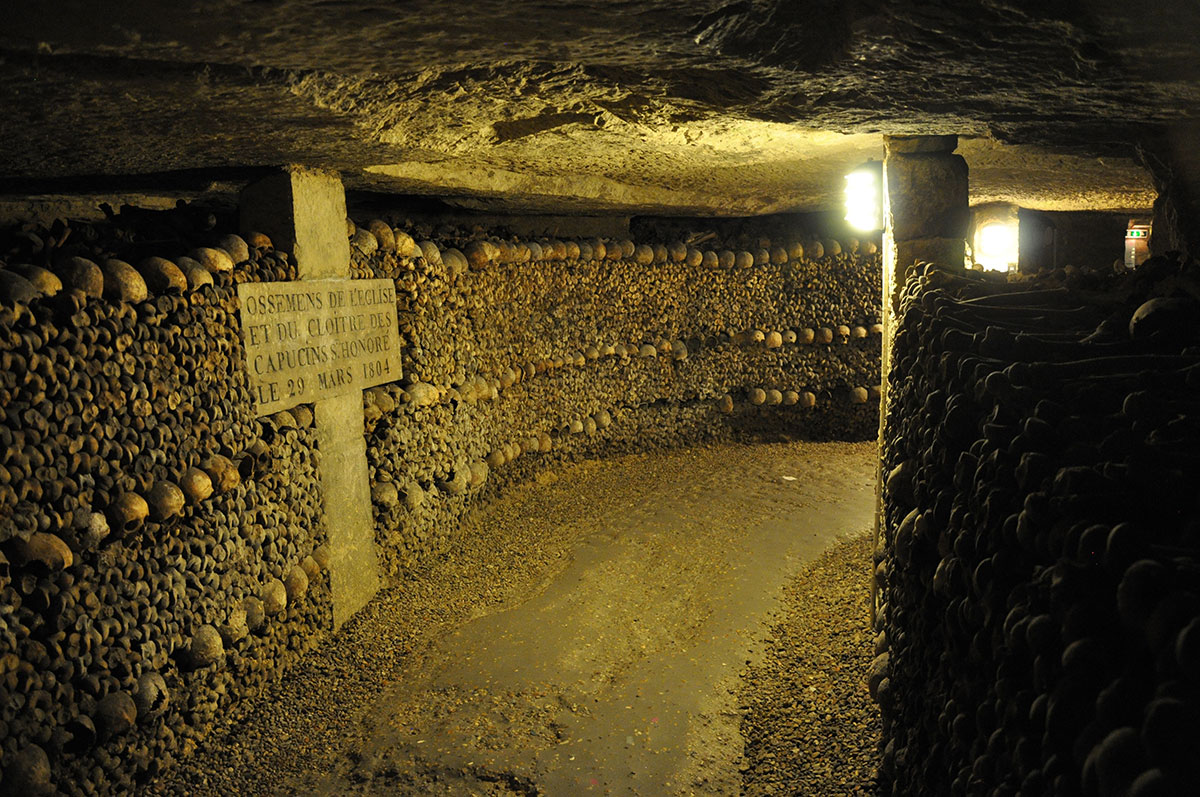
The Catacombs of Paris remain one of the Most unusual well-known outings in the capital, and for good reason: the experience is unlike any other Parisian visit. You go underground, into ancient quarries, amidst an ossuary open to the public since 1809.
The bones mainly come from Parisian cemeteries closed at the end of the 18th century. This reminder changes the way you look at the place. The catacombs are not a spectacular setting designed to impress visitors. They tell the story of cemetery management, public health, the exploitation of the subsoil, and how Paris developed over its former quarries.
An underground tour with real constraints
Before booking, please take the constraints seriously. The route includes many stairs, narrow passageways, and a dim light and a cool temperature. Individuals with claustrophobia, respiratory difficulties, or mobility issues should inquire for precise details.
From comfortable shoes are preferable. A light jacket can also be useful, even in summer. As the site is in high demand, booking in advance avoids unpleasant surprises, especially during school holidays and peak tourist seasons.
What the visit allows you to understand
First impressions are often very strong. Then, with the explanations of a guide or solid visitor support, the place becomes much more than a collection of bones.
One gains a better understanding of the old limestone quarries, the collapse problems, the transfer of bones, and the creation of the ossuary. The visit also reminds us of an often-forgotten truth: the exposed bones are human remains. This outing therefore requires a respectful attitude, even if it's part of Paris's major tourist experiences.
On the Trail of the Templars
The Templar trail offers a discovery of Paris more discreet, centered on the Marais, the Temple district, and the surroundings of the current Paris Centre town hall. The Order of the Temple left its mark on medieval Paris, but its buildings have largely disappeared.
The Temple Tower once stood on the site of the current Paris Centre town hall, on rue Eugène Spuller, before it disappeared in the 19th century. Therefore, you will not be admiring a preserved monument on site.
You're looking for traces, street names, old boundaries, urban landmarks. The visit requires a bit of attention, but it offers a real reward for history buffs.
Why is this visit unusual?
The guide will bring a nearly forgotten medieval district back to life. He will locate the former Temple enclosure, explain its role in the city, and then revisit the fate of the order after the arrests of 1307.
The route can also evoke the Temple Tower used as a prison under the French Revolution. This change in usage gives the district a unique historical density. Within a few streets, you move from the Middle Ages to the great political upheavals of the late 18th century.
Useful landmarks in the neighborhood
The Temple, Marais, and Place de la République district is easily explored on foot. The distances are reasonable, but the visit is enhanced by an old map or visuals. Without a guide, some elements may seem abstract, especially for visitors who are not very familiar with medieval Paris.
This output is suitable for history buffs, families with teenagers, school groups already prepared on the subject, and visitors who enjoy less obvious routes. For a truly enjoyable guided tour, the guide should remain concrete: show where buildings were located, explain what has disappeared, and connect each stop to what can be seen today.